 Transitour

Booking Management Software for Coach Operators: From Quote to Invoice

Booking management software for coach operators should do much more than store the basic details of a trip. A booking can change several times between the first quote and the final invoice: the customer may confirm, amend passenger numbers, change a pickup point, cancel the service or request another vehicle. Meanwhile, operations needs to know which jobs are confirmed, which have been assigned and which have actually been completed.
When these changes are managed across email, spreadsheets, calendars and separate finance tools, the problem is not simply administration. Teams can lose track of which information is current, which bookings require action and which completed services are ready to move into the financial workflow.
For coach operators, effective booking management is therefore about controlling the lifecycle of every job. The goal is to maintain a reliable record from commercial opportunity through operational delivery and into invoicing, without requiring different teams to rebuild the same information at every stage.
What booking management software for coach operators needs to control
A coach booking has a status as well as a date and destination. That distinction matters because two trips taking place next Friday may require completely different actions.
One may have been confirmed but still require operational allocation. Another may already have a vehicle and driver assigned. A third may have been cancelled. A fourth may have been completed and be ready for invoicing.
A structured booking management system should make these differences visible instead of leaving employees to interpret emails, spreadsheet colours or personal notes.
The practical objective is to give the team clear answers to questions such as:
- Which enquiries have progressed into accepted quotes?
- Which bookings are confirmed and need operational attention?
- Which jobs have already been assigned?
- Which services are currently in progress?
- Which bookings have been cancelled?
- Which trips have been completed and can move towards invoicing and reporting?
This status-based approach is especially important as booking volume grows. The difficulty is rarely entering one reservation. It is keeping hundreds of changes, handoffs and exceptions under control at the same time.
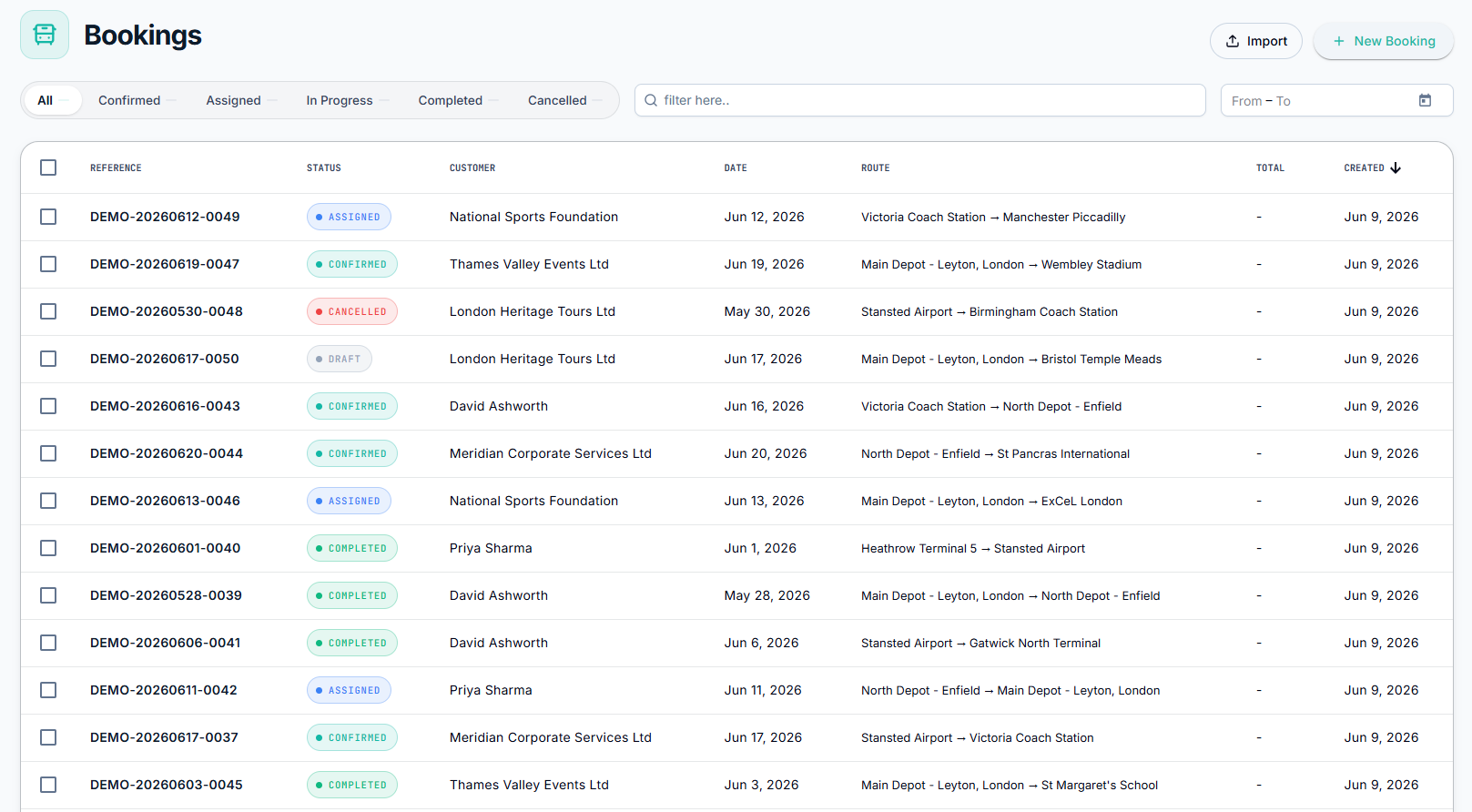
A centralized bookings view gives coach operators one place to track trips, clients, dates, routes and booking status.
Start with a controlled quote, not disconnected booking data
The booking lifecycle begins before the booking itself exists. A customer requests transport, the operator needs to understand the journey and a price has to be prepared.
Transitour supports configurable pricing, including rate structures and rules that can be applied when preparing quotes. Quotes can then be tracked through stages such as draft, sent and accepted. This creates a clearer commercial record before the job becomes part of the live operation.
That distinction helps prevent a common process problem: treating every enquiry as though it were already a confirmed booking. Operations needs to work from confirmed demand, while the commercial team still needs visibility over opportunities that have not yet converted.
Keeping the quote stage structured also makes it easier to understand which work was proposed, what was accepted and how the customer request developed before confirmation.
Confirmation should create an operational handoff
Once a customer accepts a quote, the booking needs to become operationally actionable. This is where a specialist coach booking management system differs from a simple contact database or list of sales opportunities.
The booking contains information that operations will actually use: customer details, dates and times, passenger requirements, vehicle type, pickup and destination information, stops and other trip data.
Transitour brings booking information together with scheduling and dispatch workflows. That means a confirmed booking can move forward as part of the transport operation rather than being manually recreated in another tool.
This handoff is important because every manual transfer creates another opportunity for information to diverge. A changed departure time that reaches sales but not dispatch, for example, can become an operational problem even though both teams believe their own record is correct.
Booking statuses make daily priorities clearer
Not every confirmed service requires the same action. A useful booking management workflow separates the stages that matter operationally.
Confirmed
A confirmed booking represents work the operator has committed to deliver. At this point, the team needs visibility over the trip before execution and assignment.
Assigned
Once operational resources have been allocated, the job moves into a different stage. Transitour can connect bookings with vehicle and driver information so operations teams can see which work has already been allocated.
In progress
When the service is running, its status should remain visible without the team having to rely entirely on separate messages or verbal updates.
Completed
Completion is more than the final operational status. It is also an important handoff point between service delivery, reporting and finance.
Cancelled
Cancelled work should not simply disappear. Keeping the cancellation visible preserves a clearer operational record and helps teams distinguish between work that was never confirmed, work that was cancelled and work that was successfully delivered.
Changes and cancellations are where weak booking systems show their limits
A perfectly linear booking process is easy to manage. Real operations are rarely perfectly linear.
Imagine a corporate transfer booked for 40 passengers. Three days before departure, the client changes the pickup location and increases the group to 48. Later, the return time changes. Another customer cancels a service scheduled for the same day.
If booking information is spread across an inbox, a spreadsheet and a calendar, each change has to be communicated and reproduced correctly in several places. The more versions of the booking exist, the harder it becomes to know which one should be trusted.
Centralizing the booking record reduces this fragmentation. Instead of treating changes and exceptions as side conversations, teams can keep the operational status of each booking visible within the same workflow.
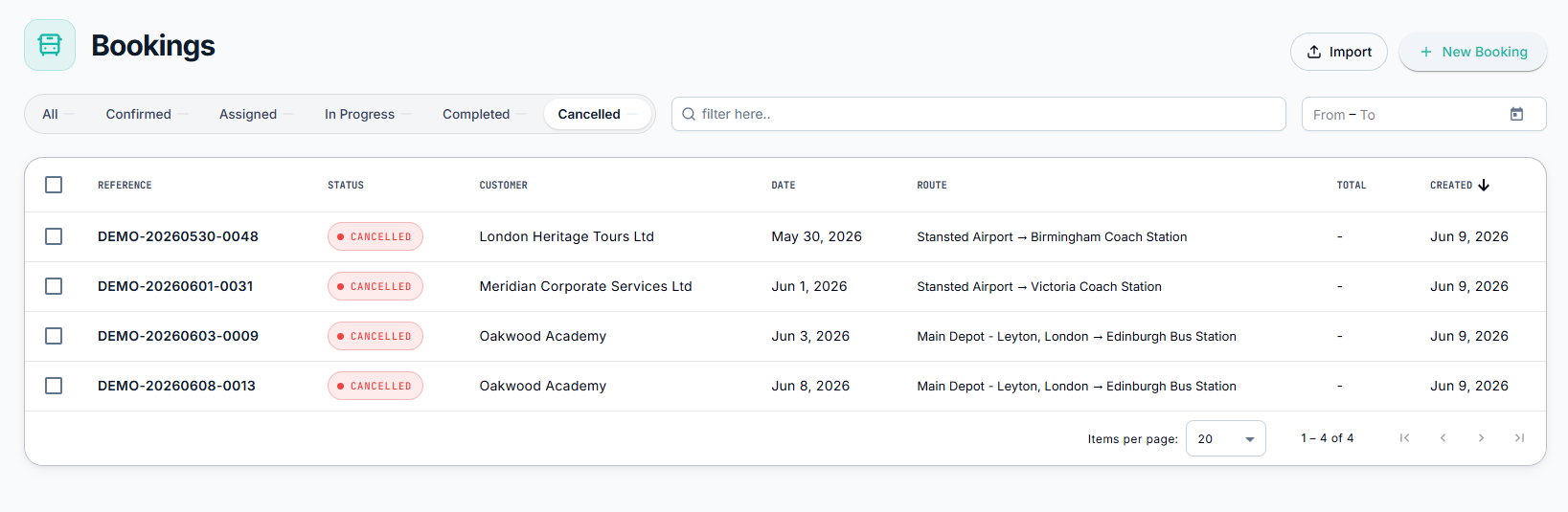
Keeping cancelled bookings visible gives operations teams better traceability instead of losing changes and exceptions in emails or spreadsheets.
From completed booking to invoice
The end of the journey is another point where disconnected systems create unnecessary work.
Once a coach trip has been completed, finance needs enough visibility to continue the process without reconstructing what happened from emails, driver messages or separate operational files.
Transitour includes invoice generation and tracking, with invoice statuses and financial information managed alongside the wider operational workflow. This connects completed transport activity more closely with the back office.
For an operator, the benefit is not simply that invoices can be created digitally. It is that the commercial, booking and operational stages leading to the invoice are part of a more structured process.
A completed booking therefore becomes an important control point. Operations can identify which services have finished, while the financial workflow can continue from a clearer record of delivered work.
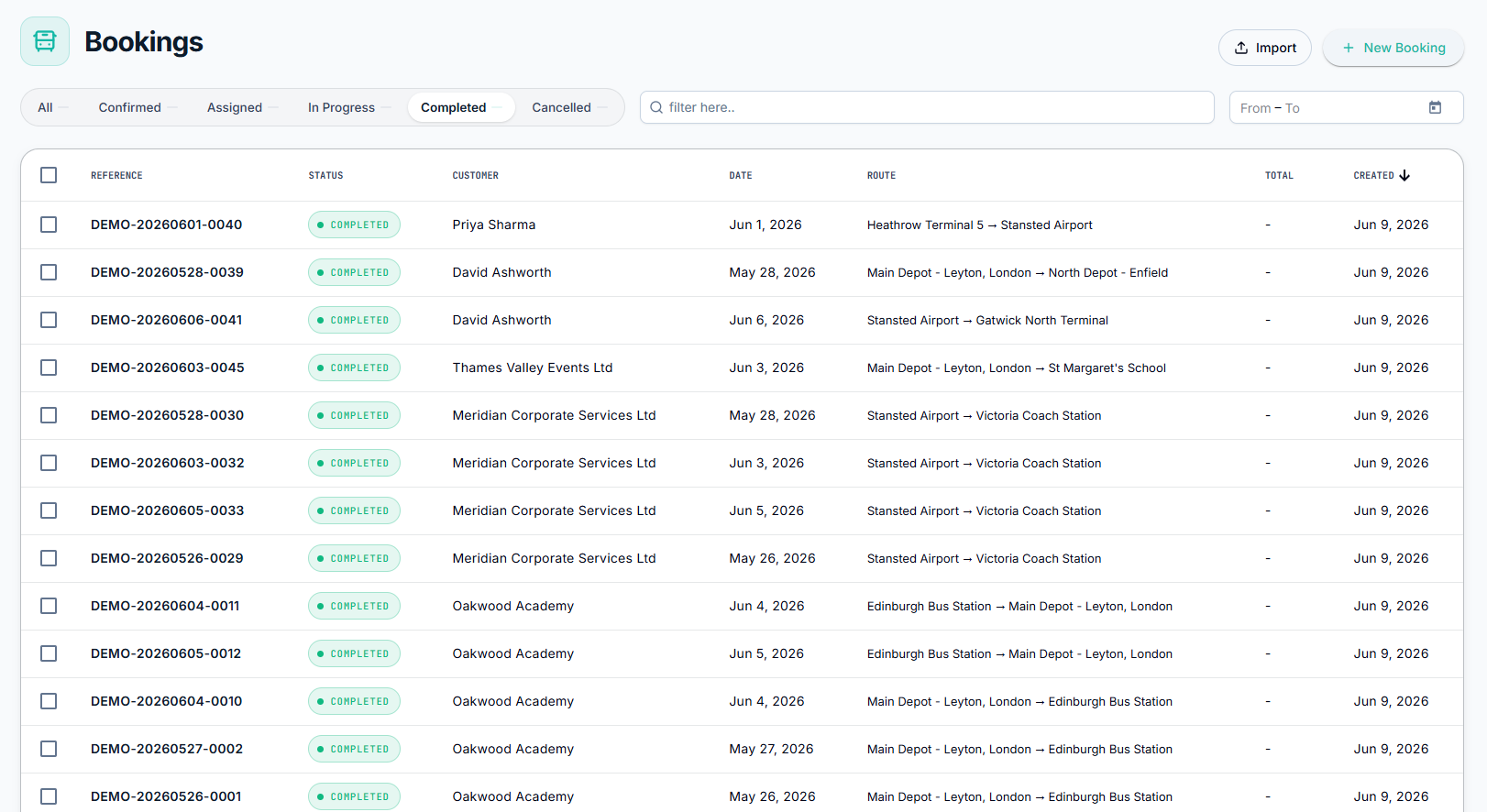
Completed bookings create a clearer handoff from transport operations to invoicing and management reporting.
Booking data also improves revenue visibility
Booking management does not finish when an individual invoice is produced. Structured booking data can also help managers understand the commercial and operational performance behind their revenue.
Transitour's reporting includes visibility over areas such as bookings, invoices, income, pending revenue and quote conversion. This gives managers a broader view than an isolated spreadsheet containing only sales totals.
For example, an operator may want to understand whether a busy quoting period is actually producing confirmed bookings, whether completed services are flowing into invoices or whether part of expected revenue is still pending.
This is why booking management belongs in the Reporting, Profitability and Conversion conversation. Better control over booking statuses improves the quality of the information available further downstream.
What to look for when choosing coach booking management software
Operators evaluating software should look beyond whether the system has a button called “New Booking”. The more useful question is whether it can support the booking as its status, operational requirements and financial consequences change.
Useful capabilities to assess include:
- structured quote and booking records;
- clear booking status management;
- customer, route, passenger and trip information in one workflow;
- connection between confirmed bookings and scheduling or dispatch;
- visibility over vehicle and driver allocation;
- traceability of cancelled and completed jobs;
- invoice generation and tracking;
- reporting across bookings, invoices and revenue;
- role-based access for operational and financial teams;
- API and webhook options when integration with other systems is required.
The right system should reduce the number of manual handoffs required to keep a booking accurate throughout its lifecycle.
Conclusion: manage the booking lifecycle, not just the reservation
Booking management software for coach operators creates the most value when it provides control from the commercial stage through delivery and financial follow-up. Quotes, confirmed bookings, operational statuses, cancellations, completed services and invoices should not behave like unrelated records.
Transitour is designed around this structured transport workflow, connecting quoting, booking management, scheduling, dispatch, invoicing and reporting for coach and bus operations.
If your team is still updating the same booking across spreadsheets, emails, calendars and finance tools, you can explore Transitour with a 7-day free trial or book a demo to see how booking management software for coach operators can support your own quote-to-invoice process.